


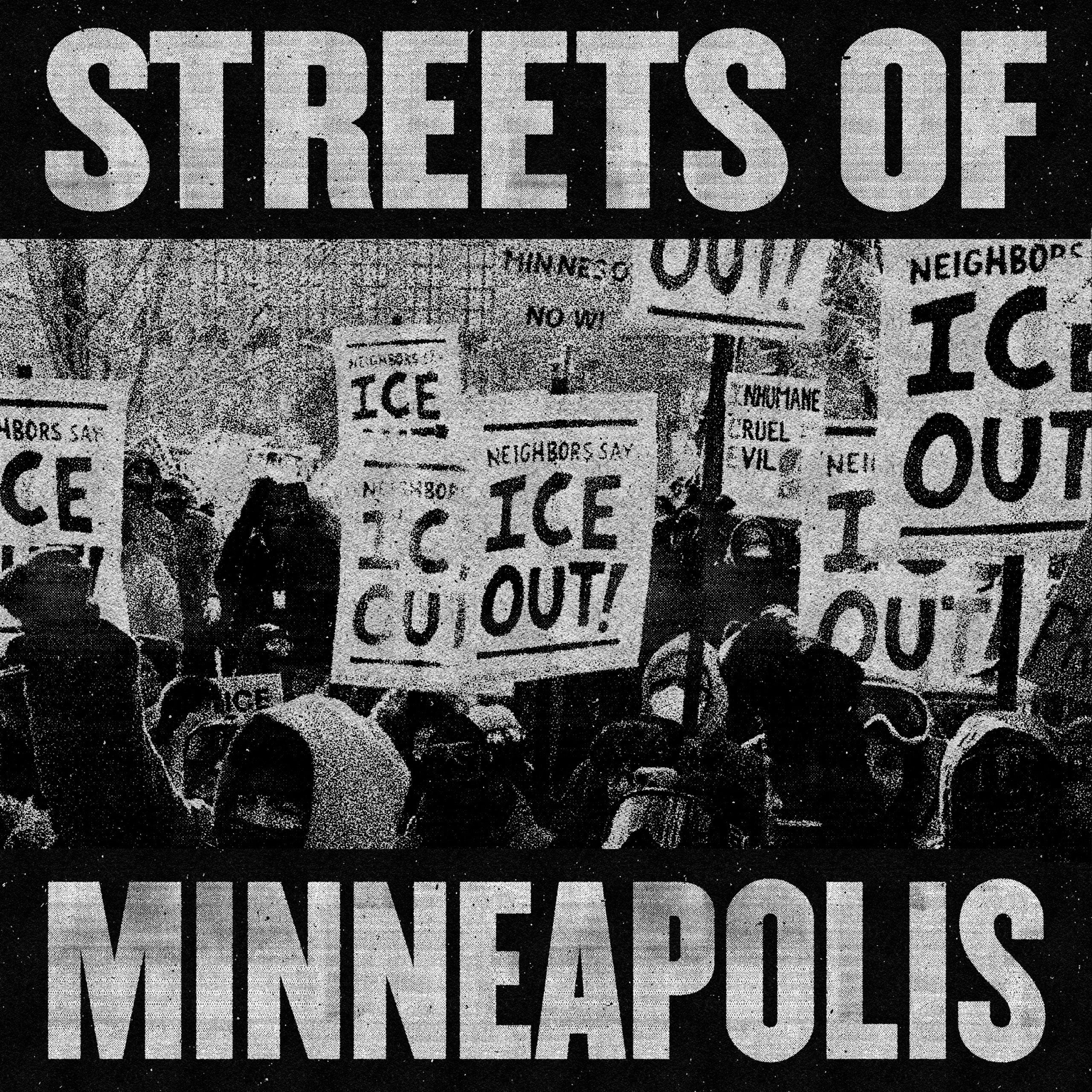
Mr. Working Class himself has released a song about ICE, which is good in the sense that it feels appropriate, and bad in the more concrete sense that the song is unpleasant to listen to. Springsteen has long been the musical tribune of the American outsider, so it feels appropriate for him to chime in on the troubling trend of masked federal officials gunning down American protestors.
However, his effort feels contrived. Listeners were likely able to guess which two were left to die on the snow-filled Streets of Minneapolis without Springsteen naming them explicitly. Twice. Likewise, lines like “King Trump’s private army” have the rough eloquence of what other 76-year olds save for Facebook. By the time the gospel choir joins for the chorus, I was checking the track’s runtime.
But none of that really matters. The man who gave us Born in the USA has given us an anthem of the new discontent. Because something new has emerged since Minneapolis. Since the killing of Alex Pretti, more people are recognizing the abnormality of our government killing American citizens. And people are responding with dissidence.
“Dissidence is not revolution; it is not even political opposition. It’s something much more elemental. It emerges in environments where power—usually government power—tramples on the basic conditions of life as people know and value them,” writes Gal Beckerman for the Atlantic. What’s going on in Minneapolis, unlike the Pussy Hat riots of the first term, is not overtly political. They’re about a right to normalcy, a life without threats of violence and coercion.
The Czech playwright (perhaps better known as that country’s first president) Václav Havel understood this sort of dissidence as pre-political. “It could emerge from wanting to play strange music, wear one’s hair long, speak one’s mind, defend one’s economic interests, or protect vulnerable neighbors.”
And the roots of dissidence have long been braided with the bones of art. Creativity is the product of outsiders expressing rebellion, however explicit, with the power structures of society. Pablo Picasso put it nicely: “What do you think an artist is?” he asked. “He is a political being … Painting is not done to decorate apartments. It is an instrument of war.”
In this sense, art is inherently rebellious. It responds to the existing power structures and seeks to change them. It’s why strongmen leaders have always sought to control creative expression, as Trump has in Washington.
Last month, Phillip Glass called off the premiere of his new Symphony, Lincoln, at the Kennedy Center, saying that, “the values of the Kennedy Center today are in direct conflict with the message of the Symphony.” The Center was dedicated to Kennedy because the former president believed that democracy and the arts were fundamentally intertwined. He was right. Trump’s control of the board, and subsequent closure, of the Center is just another move by a wannabe dictator out of the tired playbook of autocracy. It’s all the more reason we need new music for the new dissidence.
So when Springsteen comes out with a song about the killings, I think we should overlook the fact that it isn’t very good. After all, it wasn’t like Dylan was a great singer. I’m frankly not sure if Pete Seeger knew more than three chords on the banjo. Protest songs have never been about technical mastery. The music almost isn’t the point. Upheaval demands a soundtrack, and when art starts getting political, history tends to follow.