


Is ‘brat’ still a thing? A couple of years back, riding on the coattails of Charli XCX’s eponymous album, Brat, the term of art for anything deemed “Cool, audacious or unafraid to mess with convention,” took over mainstream pop music.
Brat may sound like an insult, but in the last few years, “Seeming a little immature, a little selfish, a little nasty, has taken on an air of glamour,” writes Spencer Kornhaber for the Atlantic. Although the ‘bad girl’ is a tired cliche of pop music, new stars like Olivia Rodrigo and Sabrina Carpenter have crystallized a different sort of insouciance. It’s mischievous and scheming, to be sure; Carpenter’s videos frequently feature her boyfriends meeting untimely ends. But it goes well beyond ‘Oops I Did it Again.’
Reflecting a growing gender alienation within Gen. Z, the Brat era of pop seems to say, ‘men suck, who needs ‘em anyway?” It presumes that dating isn’t going to get better soon, and we might as well laugh about it. “He didn’t ask a single question / And he was wearing these fugly jeans,” sneers Chappell Roan on “Super Graphic Ultra Modern Girl.” On “Love is Embarrassing,” Olivia Rodrigo decries, “For some weird second string / Loser who's not worth mentioning / My God, love's embarrassing as hell.”
The shift has proven wildly successful. Gen. Z audiences, fed up with ghosts on Hinge and casual-exclusive talking stages that go nowhere, resonate with this brand of love story. Following Short n’ Sweet, Sabrina Carpenter enjoyed a meteoric rise to success. She’s been nominated for six Grammys in the last couple years. After her performance of “Manchild,” on the Grammys, when Carpenter sang, “Half your brain just ain't there / Manchild / Why you always come a running?” sales of the song went up 600%. Streaming allows artists like Carpenter to succeed with a brand of pop that doesn’t try to please everyone.
But Brat is more than just man-hating. It’s introspective; it’s raw and vulnerable about mental health in a way that resonates with the first generation to grew up proud to go to therapy. “And I try to be the chill girl / That holds her tongue and gives you space / I try to be the chill girl / But honestly, I'm not,” confesses Chappell Roan on Casual, a song about the silent strain of hookup culture. In short, Brat-era pop reflects the multifaceted experience of Gen. Z.
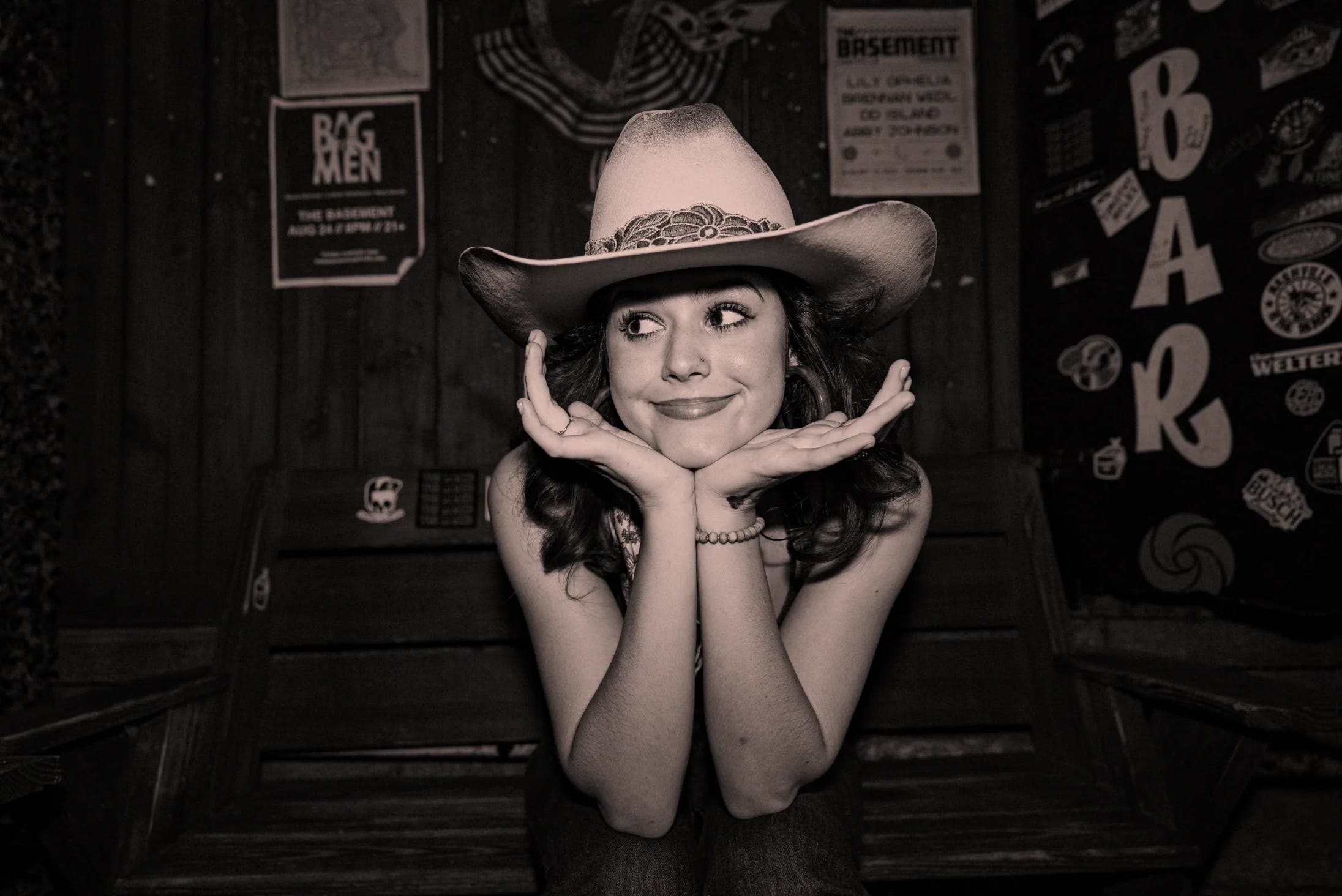
Enter Maggie Antone. Antone, who came to prominence on TikTok, is 23 years old. Like many other 23-year-olds, she has a wealth of experiences in fraternity basements and smoking weed in backyard sheds. Unlike most 23-year-olds, she has quickly built a country career singing about them. Antone is taking the Brat playbook from pop music and using it to create a new brand of Gen Z country.
On “Suburban Outlaw,” Antone calls out cowboy cosplayers everywhere: “You think you're such a man, but you're a fucking sociopath,” but she also reflects candidly on the toll the relationship took, “You've got me on the verge of an existential nervous breakdown.” This is the essential core that sets Antone apart from earlier girl power country. When Carrie Underwood sang “Before He Cheats,” she left out the part about the rough nights before she got out the baseball bat.
On “The Devil’s Not in Hell,” Antone turns her attention to the men of East Nashville: “Let me tell you 'bout a man, 5'8, swears that he's 5'10,” she begins. Someone ought to pitch it as a jingle for Lakeside Lounge. The chorus, a rousing call that the “Devil’s not in hell, he’s in a bar with the boys on the East side of the town,” is sure to be a singalong for all the women who have been personally wronged by my East Nashville brethren.
Antone’s new song, “White Horses,” a collab with Anna Bates, opens with a lonely fiddle that sounds like we might just launch into Camptown Races. Fortunately we do not. “White Horses” is more mild than some of Antone’s other recent efforts, but it’s cut from the same cloth. “Stupid boy, don’t fuck with forces / That you don’t know … Men they used to go to war,” the two duet on the chorus. “Heard you had a breakdown / Got a new woman,” feels like a line informed by modern dating. It’s hard to imagine even Loretta Lynn accepting the premise that her old flame was seeing a therapist. In all, “White Horses” feels like if Chappell Roan put on a suede fringe coat and set out to write a two stepping song.
I saw Antone debut “The Devil’s Not in Hell,” live in East Nashville. Never have I felt so called-out at a concert (in my defense, the boots do add a few inches). But Antone’s show was also the first time I’ve heard country music that felt catered to my generation. Most audiences won’t relate to songs about dating apps and regretful frat party hookups. That’s the appeal of the songs for those that do.
Antone recognizes the modernity of her music. “With situationships and such nowadays, it feels like no one is looking for the real thing anymore. This album is for the people who didn’t get the I’m sorry text.” she says in the release notes for Rhinestoned. She’s not the only one who’s taking female country music away the traditional love narratives. But much of the mainstream seems stuck singing about putting on the quarterback’s jersey and going for strawberry milkshakes after the big game. What Antone is doing - pulling divisive themes from current pop music and setting them against country aesthetics - represents a certain perversion of the Pop Country era and will be the next big thing.