


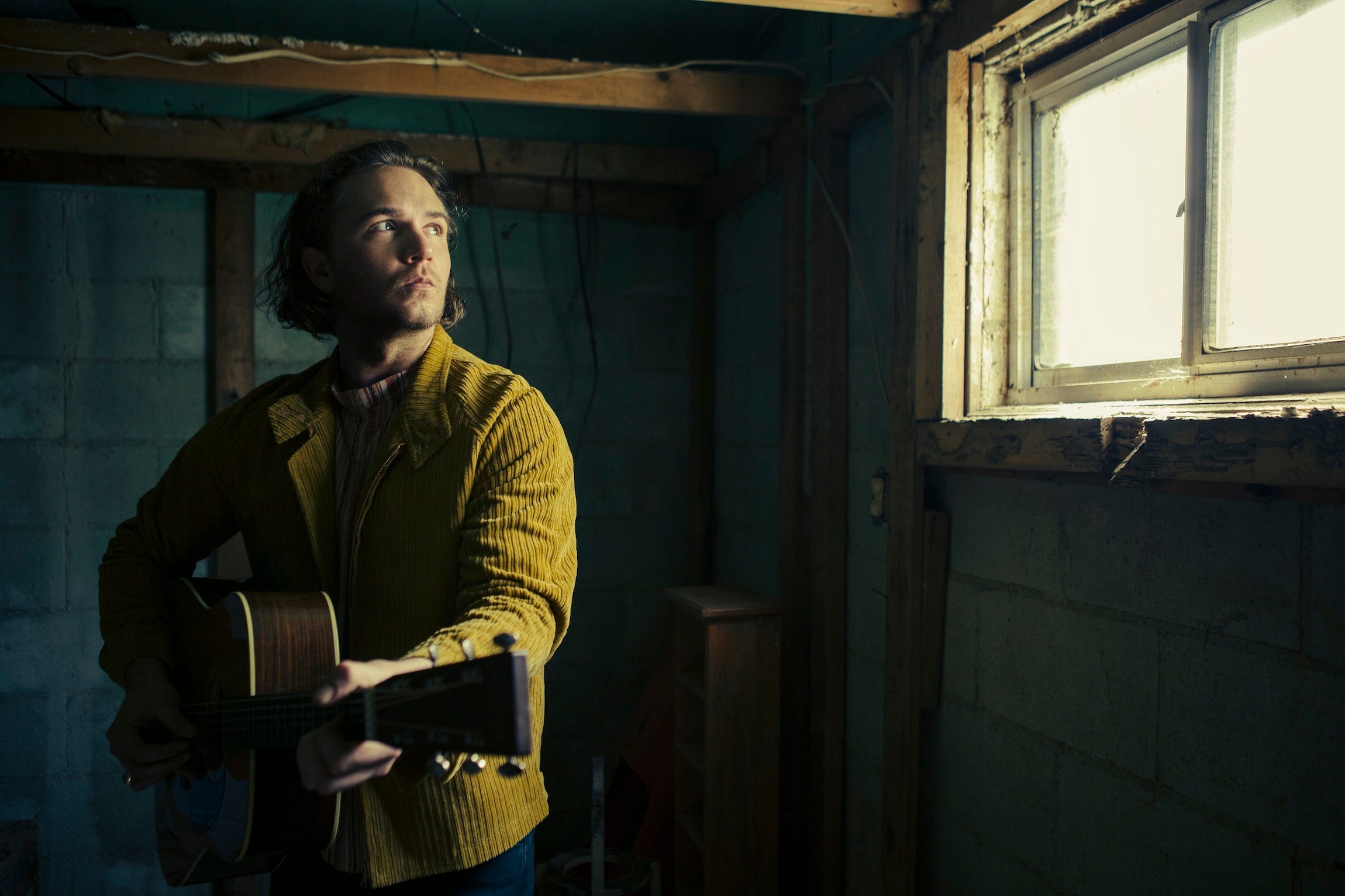
No one writes like Blaze Foley anymore. In the 1970s, there was a seemingly endless supply of alt-country writers. Singers who wrote their own songs and did so with the craft of a poet. From the folksingers like Gordon Lightfoot and Jim Croce to the working class heroes — John Prine, Guy Clark, Townes of course — the 70s were the singer songwriter decade.
And then, for no clear reason, that changed. Sure, Springsteen gave us Nebraska in the 80s, and Dylan kept churning out noise, but by and large, the songwriter’s moment had come and gone. Country, for its part, turned mostly to radio-ready hits, overproduced and overladen with pedal steel. In time, the genre would touch on poignant themes like ‘big green tractors,’ cowboy boots, and grape soda.
But lately something’s changed. A new crop of singer songwriters, riding broadly in the country / Americana lane, seem compelled to write better. Ian Noe is one of these artists.
His new song, Jukebox Blues (For Blaze Foley) sounds like what you’d get if Mr. Foley took psilocybin while locked in a room with an old reverb tank. Allusions to classic alt-country lace the verses, while an eerily distant pedal steel whines. The track sounds something like being stuck in the anteroom of some honky tonk, hearing an old troubadour through a smoke-stained curtain.
Mr. Noe, somehow only 35 years old, is another from the long tradition of Kentucky songwriters. His music, like that of Prine or Childers, handles themes of poverty, death and addiction. Sonically it is as reminiscent of Dylan as it is of Gram Parsons or other cosmic country heroes. Noe’s excellent debut, “Between the Country,” was produced by Dave Cobb, whose resume could roughly stand-in for a list of who’s-worth-listening-to in alt country.
The new track was recorded and produced by Andrija Tokic— a man not from the hollers of Kentucky but from the suburbs of Washington, born to Croatian immigrants. Influenced by punk and the Beatles, Tokic has since become a key player in the roots-rock movement. It really does take a village.
I suspect that the timing of this folk revival is no coincidence. Between skyrocketing inequality, war, and political unrest, the 2020s resembles the early 1970s in many respects. The news reports that gave us Election Day or Sam Stone didn’t sound too different from the nightly news today. I, for one, am glad that at least a few people are still trying to write like those old folk heroes.