


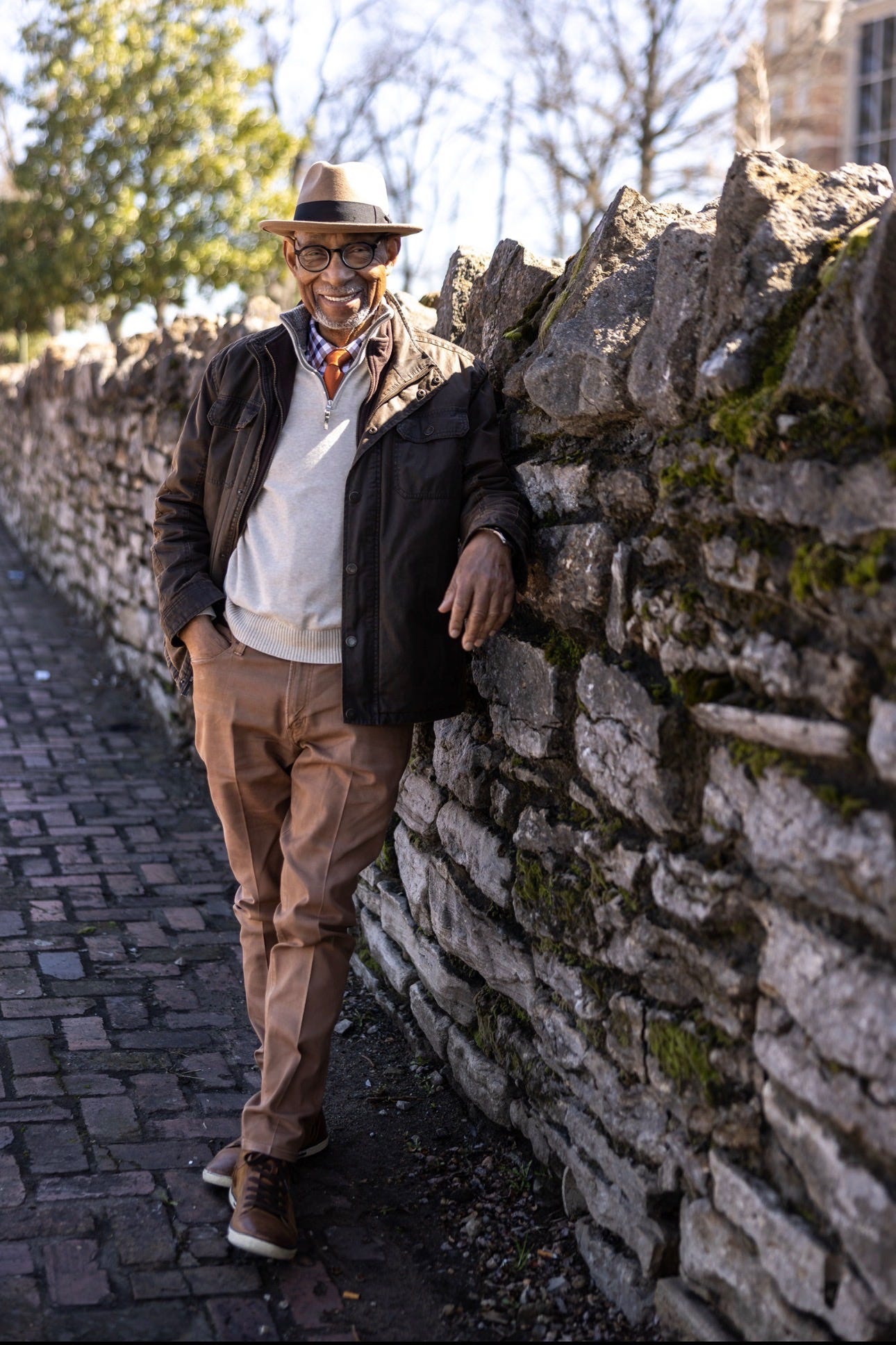
Lorenzo Washington died last month at 83. For the last fifteen years he was one of the only people keeping Jefferson Street’s memory alive.
Washington was, himself, a Jefferson Street man. As a teenager, he first encountered the neighborhood when he drove his friend Herbert Hunter to an audition. It wasn’t all that long before he opened “Soul Shack Records and Boutique,” hosting performers from North Nashville and beyond. “I needed to move back to Jefferson Street — to my part of town,” he said in a 2024 interview.
In 2011, he turned his passion for the neighborhood’s history toward creating the Jefferson Street Sound Museum. Urged by Marion James and other local musicians, Washington converted his home into a shrine to Jefferson Street. What began as a tribute to friends grew into a collection of thousands of artifacts, and into a place where visitors from around the world could witness Nashville’s Black music history and hear about it from someone who lived it.
When I visited last year, Washington was the one showing me the museum, and that’s the point: Jefferson Street’s history had one keeper. When he showed me around, he interwove stories from his own past with the story of the neighborhood writ large.
I spoke to Karen Coffee, Vice President of the Museum. She told me that James and others “felt like their legacy was going to be forgotten.” The musicians who made the street expected to be forgotten.
Which would be a shame, because if Music Row was the heart of Nashville, Jefferson Street was its soul. The street ties together Fisk, Tennessee State and Meharry. Back in the day, it was something like a “village,” according to Coffee: “You could live your whole life on Jefferson street…. Anything you needed was there.”
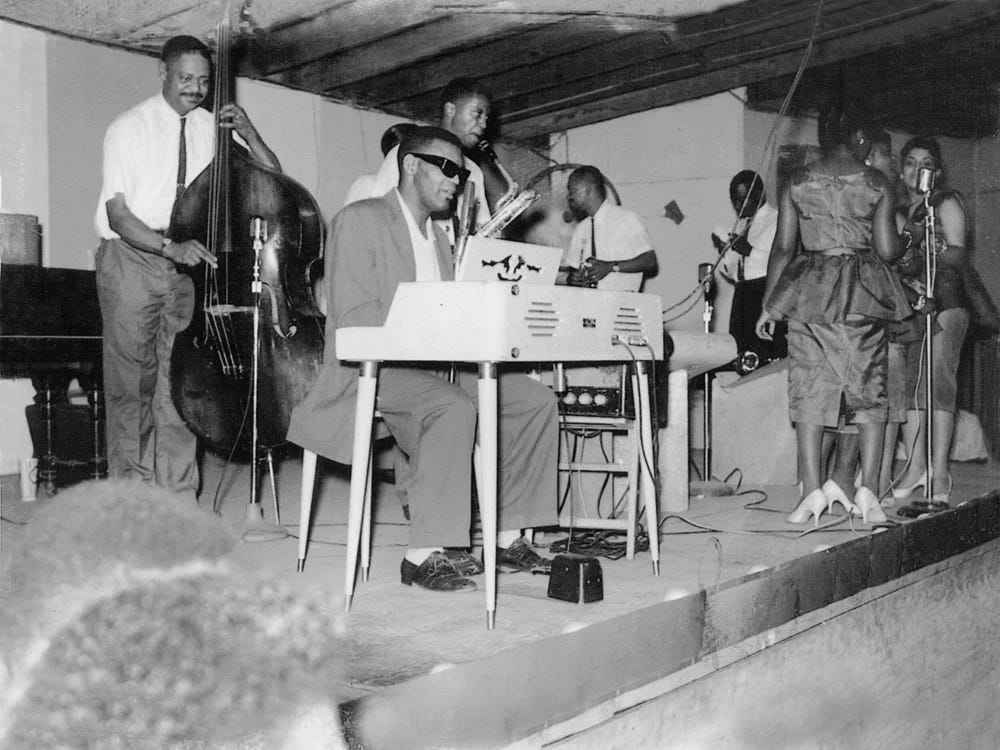
And at night, the biggest names in R&B and soul came through its clubs. At the Del Morocco, the New Era, Maceo’s, Club Baron, and Club Stealaway, you could see Ella Fitzgerald, Jackie Shane, Etta James or Ray Charles. Little Richard and Otis Redding passed through. Even Jimi Hendrix and Billy Cox played on Jefferson Street before anyone outside the neighborhood knew their names.
But Nashville tends to tell one story about itself, and it isn’t that one. If you go to the Opry, you’ll hear that in 1950, WSM announcer David Cobb ad-libbed a nickname for the city: “Music City USA.” It’s a good story, but there’s a problem: The name was actually coined 77 years earlier, when Queen Victoria heard the Fisk Jubilee Singers, arguably the finest gospel choir in the world. .But Fisk is an HBCU. They don’t wear Nudie suits or sing about drinkin’ and cheatin’. And so now, when you drive into Nashville, the little green sign on the highway reads “Home of the Grand Ole Opry,” not the Fisk Jubilee Singers. Nashville sells itself as the home of Country Music, and Jefferson Street never fit into that narrative.
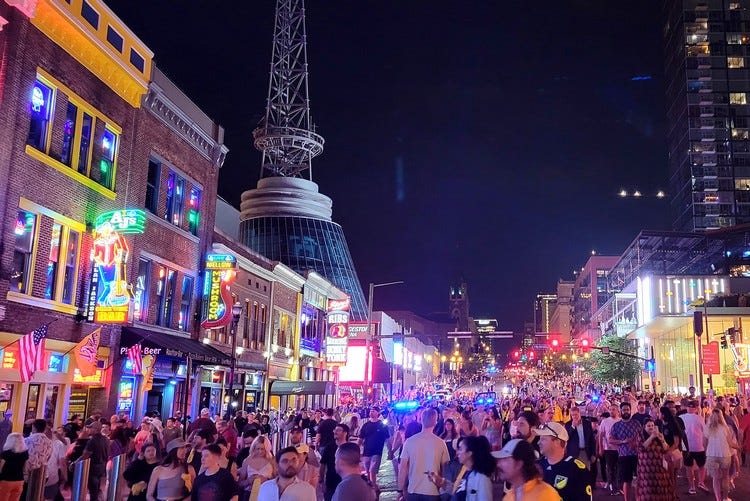
And Nashville’s selective memory isn’t accidental. A product gets narrowed to what sells. Today, the Nashville Convention & Visitors Corp holds the ‘Music City USA’ brand and markets it, and their money comes partly from hotel taxes. Every visitor who sleeps downtown helps pay for the ads that brought them there. They come for Broadway and for the Opry. They come to drink a Michelob Ultra in a six-story bar partly owned by Morgan Wallen.
But the country brand sells. In 2023, the city drew a record 16.8 million visitors, who spent more than $10 billion. Butch Spyridon, who ran the NCVC for years, said it plainly: “Our brand is our product … It’s paramount.”
You can hear it before you leave the airport. Blake Shelton greets you from the baggage claim. A life-size hologram of country star Dierks Bentley directs travelers to his Row 94 bourbon whiskey brand at The Pharmacy Burger Parlor in the airport. A visitor gets a full picture of Nashville before reaching baggage claim, but it’s a costume. You can even buy the matching boots when you take a cab down to Broadway.
By the end of a weekend downtown, the manufactured brand feels like the real thing. Most visitors will never venture to North Nashville, nor will they explore the jazz and punk clubs that round out Music City’s music scene. Tourists return home contented with their visit, newly decked out in knock-off turquoise and pleather boots. They’ll never care that they never saw the real Music City.
Now, in 2021 the National Museum of African American Music did finally open (after a 23-year grassroots campaign). It hardly seemed to be a priority for the city: The Country Music Hall of Fame had been there for half a century. So, the story now gets told, but meanwhile the street where it happened was left to one man to preserve.
And Jefferson Street’s preservation has been an uphill battle. In the 1960s, the state ran I-40 through the heart of the street. About 130 Black businesses, more than 600 homes and six churches were flattened. Coffee was clear about the highway’s impact on the community: “When you demolish 20 clubs along with all the homes and other businesses, it’s just not possible to have a community.”
The neighborhood fought back, and like in many other cities, the court let the highway through anyway. Fisk and A&I professors formed the I-40 Steering Committee, represented by the NAACP Legal Defense Fund. But hearing notices were posted in white neighborhoods and listed the wrong date. A judge found the notice inadequate and the harm real, then ruled for the state. The Supreme Court denied review in 1968.
The pressure didn’t end with the interstate. From 2010 to 2020, Nashville ranked as the most intensely gentrified U.S. city, according to a study by the National Community Reinvestment Coalition. In North Nashville, median home values jumped from $100,170 in 2010 to $532,121 by 2020, with certain census tracts seeing increases up to 430%. Meanwhile four census tracts shifted from majority Black to majority non-Black between 1980 and 2020, resulting in a loss of over 4,100 Black residents. Roughly 99% of Nashville is now considered unaffordable for median-income Black and Hispanic families. Coffee wasn’t surprised: “Destruction is not new, redlining is not new, gentrification is not new.”

So when I read the news of Washington’s death, I thought of more than the loss of one man. What’s left of historic Jefferson Street is small enough to list in one sentence. There’s Club Baron, the last nightclub of its era still standing, a museum that now has to go on without its founder, and a few historical markers. It’s bound together by the threads of memory, held by people who are getting older every year.
The remaining bits of Jefferson Street won’t be torn down all at once the way it was in the 1960s. It will fade, one building and one obituary at a time, until the only place it exists is a plaque.
But that doesn’t have to be the way it goes. Nashville owes Washington the protection he gave his neighborhood by himself. And there are concrete solutions. Some in the neighborhood have asked for the area to be recognized as a cultural district. Karen Coffee suggested that the museum should be included on city bus tours. Personally, I’d like to see Jefferson Street marketed in the same way as country music is by the city.
The city has a model for how to do this because it’s done it before. Downtown was not always the countrified Disneyland it is today. Broadway used to be furniture stores and peep shows. Now, it’s an international tourist destination. That wouldn’t have been possible without substantial investment from the city, which it received. Now, Jefferson Street deserves the same.
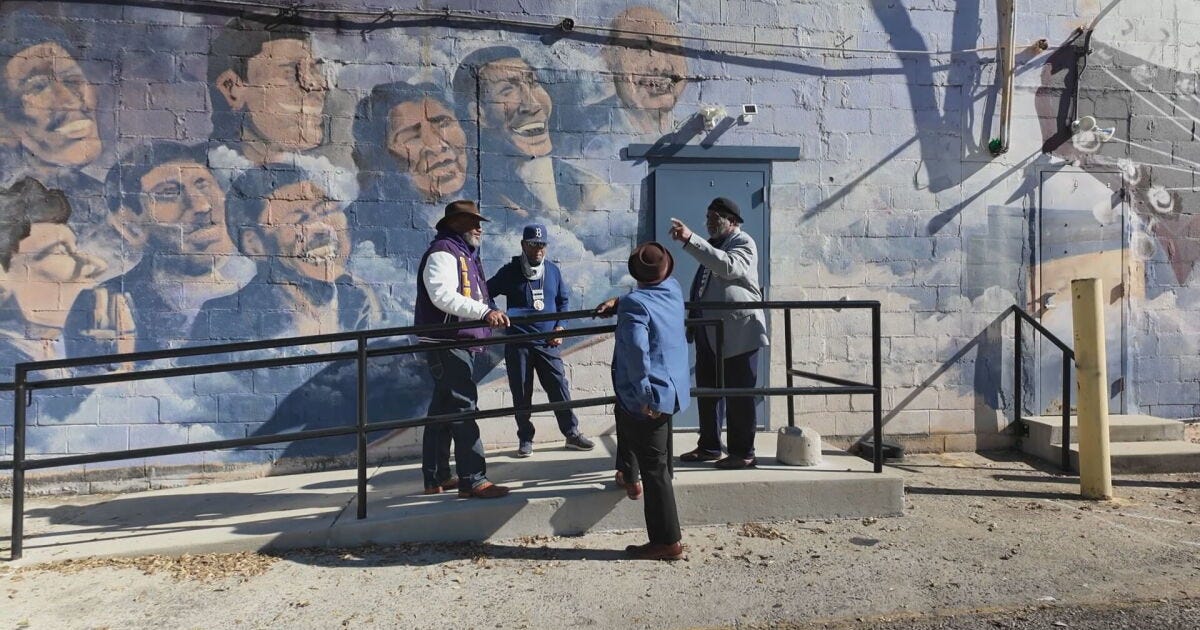
Lorenzo Washington spent his life preserving the memory of Jefferson Street. Now that he’s gone, who will carry the torch?
When I talked to Coffee about what Washington’s death means for the neighborhood, she was unexpectedly optimistic. “I hate to say you’ll lose anything,” she said. “He left such an imprint and he left footprints for individuals to follow.” She continued to explain that she sees his passing as a baton being passed forward.
I hope she’s right. It takes passion and strength to do what Lorenzo Washington did -- to stand up for a neighborhood which had been literally and figuratively bulldozed time and time again and to say, “we deserve to be remembered.” I just hope enough people in Nashville heard him say it to take the baton for themselves.
One group of musicians certainly did, and they’re trying to make sure everyone else hears it too.
This Saturday, members of the Pride of Tennessee Elks Lodge No. 1102 are partnering with Michael ‘Papa’ Turney, who owns a juke joint out by Nashville Shores to host a blues show at the former Club Baron. Organizers hope bringing the music back will inspire a broader community revival.
I think they’re onto something. "Bring people back together and back to Jefferson Street, businesses come back and Blacks start coming back to Jefferson Street," Jimmie Mitchell Jr., a member of the lodge, said. Music has always been a rarified force for community organization. Maybe by restoring the soundtrack, the heart of Jefferson Street will keep beating a while longer.