


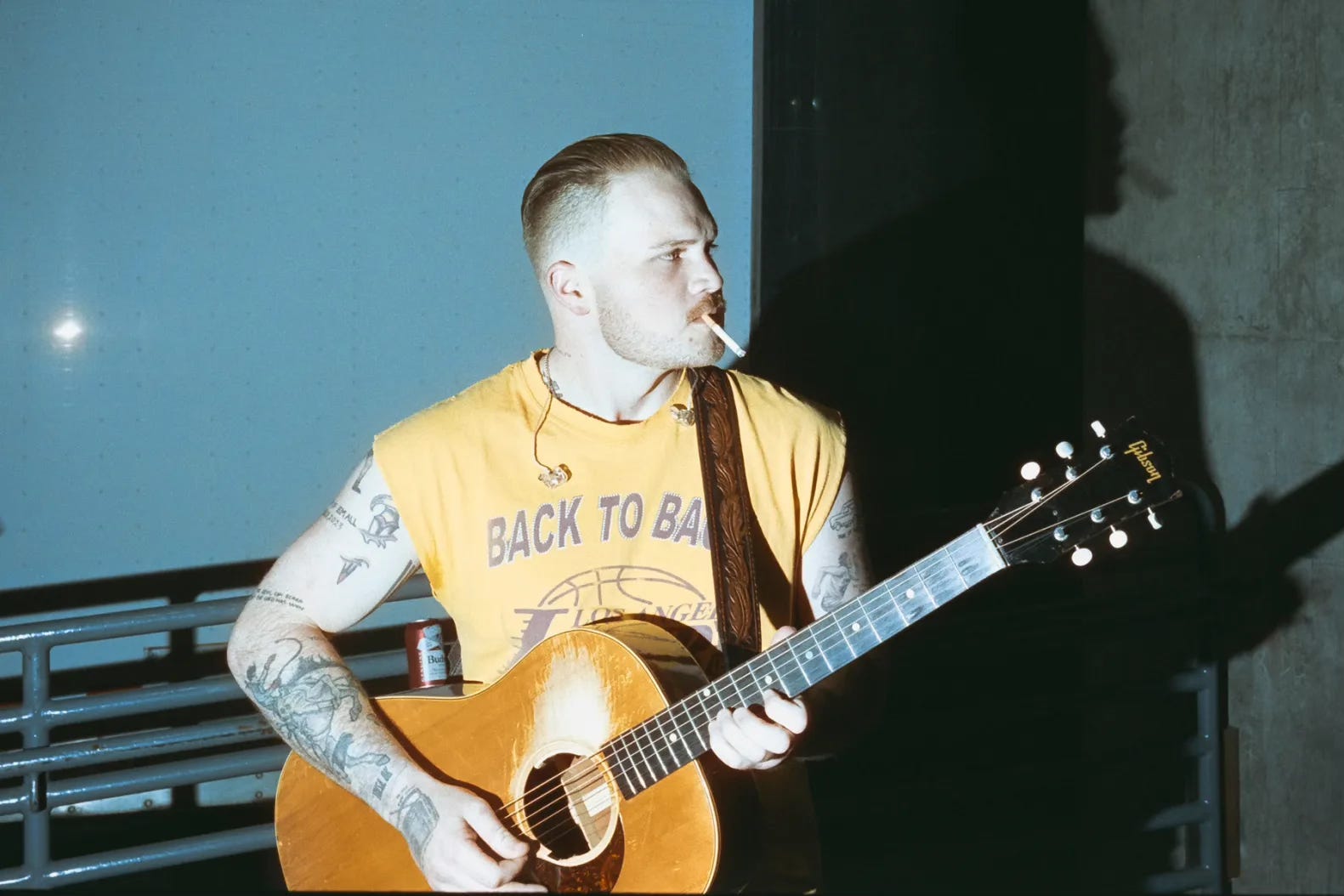
It seems that the protest song is dead. Last month, when Zach Bryan released, “Bad News,” a song about national divisions, it elicited a certain shock and awe from both sides of the aisle. The right took issue with Bryan’s criticism of ICE; in the song, Bryan warns, "ICE is gonna come, bust down your door." The left, however, seemed unsure as well. Why was the guy who sings about whiskey talking about the Department of Homeland Security?
It’s been a long time since the third most popular musician in the US was writing against the government. Half a century ago, it was all the rage. In 1963 Bob Dylan recorded “Masters of War,” a song critical of US intervention in Vietnam. That was two years before the Johnson administration’s massive escalation of ground troops. It didn’t take much for the folkies to condemn Washington.
Many popular artists, from Billie Holliday to Bruce Springsteen, made political statements in song. And then, sometime around the digital music revolution, the protest song became relegated to the annals of alternative music. Sure, writers like James McMurtry and some rock bands like Rage Against the Machine made political music, but the mainstream had shifted. After 9/11, pop and country music stressed unity, not division. Artists preached patriotism, not dissent. Songs like “Courtesy of the Red, White and Blue (The Angry American,” and “Where Were You (When The World Stopped Turning),” topped the charts.
Streaming exacerbated the trend. Digital siloing has decreased the relevance of making the Top 40, says James Sullivan in his book Which Side Are You On? “In the 1960s, if Curtis Mayfield or Bob Dylan wrote a track that addressed a social issue, and it was a hit, they got on the Top 40 radio, and Top 40 radio was what every single human being listened to. Now we’re all siloed.” This fragmentation makes it hard for any track to achieve cultural saturation.
Now, with political division reaching levels theorists couldn’t even theorize in the 1960s, mainstream protest music shows signs of life. Jesse Welles, the darling of the Americana world was nominated for four Grammys on the back of songs like “Join ICE,” and “United Health.” With “Bad News,” Zach Bryan is bringing radio country onto the same shaky ground.
It didn’t come without backlash. The White House responded with a statement condemning Bryan: "While Zach Bryan wants to Open The Gates to criminal illegal aliens and has Condemned heroic ICE officers, Something in the Orange tells me a majority of Americans disagree with him." Setting aside a seemingly AI-generated press release, it’s refreshing to see a popular artist clashing with the government.
There’s a long history of country artists coming up against entrenched power structures. In 1975, Loretta Lynn’s song “The Pill” was banned from country radio. In 2013, Kacey Musgraves faced similar pushback to “Follow Your Arrow,” over lyrics declaring her support for LGBT rights and recreational marijuana use. Johnny Cash, Kitty Wells and Conway Twitty all had songs banned from radio play. Not a bad list of names to wind up on.
For his part, Bryan expressed disappointment at the Trump administration’s response. He wrote on Instagram stressing unity, "Left wing or right wing we're all one bird and American. To be clear I'm on neither of these radical sides."
I, for one, wish he’d held his ground.
Art isn’t meant to please all. When songs are pissing someone off, there’s a good chance they’re speaking truth to someone else. For that reason, I hope to see more protest music from Bryan and other American songwriters. The last time America was this divided, it brought us some of the best music of the 21st century. I’m holding out my hope that even streaming can’t take that artistic current away.
Maybe a tangent here but curious if Woody Guthrie counts as country protest. Definitely protest; perhaps only country adjacent. Merle Haggard? More clearly country. Okie from Muskogee or Fighting Side of Me could well be viewed as protest songs of a sort.