


Since its inception, blues music has essentially asked one question: what is the appeal of a mortal existence in a cruel world? In 1931, facing a great depression that hit the Delta even harder than the banks in New York City, Skip James sang, “if I can ever get off of this old hard killing floor, Lord I’ll never get down this low no more.” Blues music is the transcendent struggle for equal footing given unequal foundation.
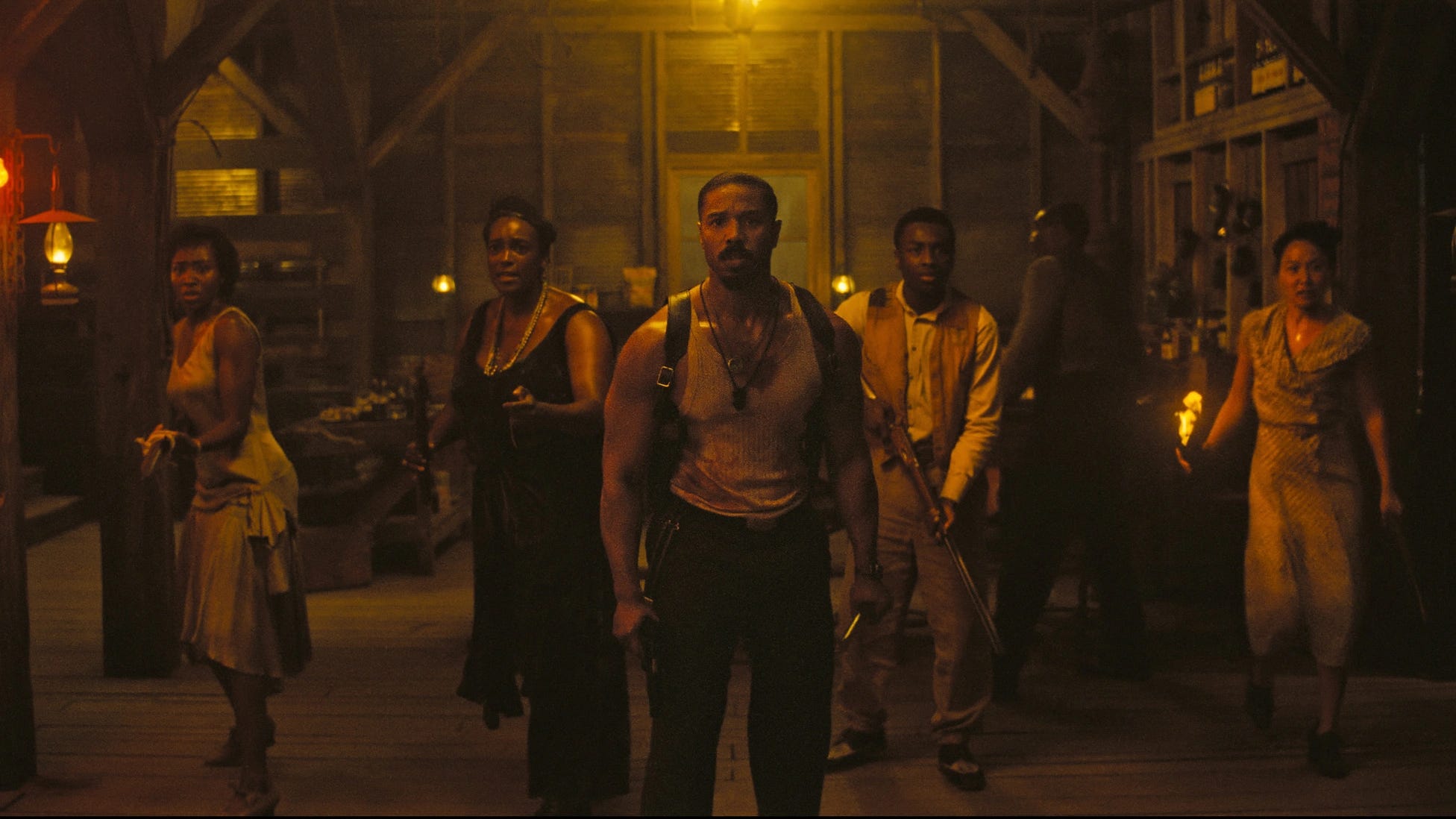
Sinners, set in 1932 in Clarksdale, uses blues music not only as a soundtrack, but as a central metaphor for a story of attempted salvation. Though on its surface a movie about the undead, the real threat in the film may be the looming specter of the Jim Crow economy. The sawmill the twins by seeking upward mobility becomes a death trap. The symbolism isn’t difficult to grasp.
The interwar economy the twins inhabited was a near-inescapable poverty sentence for black Americans in the South. W.E.B. Du Bois wrote at the time, “The black peon is held down by perpetual debt or petty criminal judgments… If by accident or miracle he escapes and becomes a landholder, his property, civil and political status are still at the mercy of the worst of the white voters, and his very life at the whim of the mob.”
In Sinners we see various forms of this struggle. Stack and his cousin Sammie pass by a chain gang on their way to the juke joint. After the abolition of slavery, many Southern states passed laws enabling convict-leasing, wherein authorities could arrest black people for small crimes and force them to work without pay under heinous conditions. Likewise, sharecropping kept poor black and white southerners in an unending cycle of debt. Du Bois described it as “serfdom.”
Blues music, given this context, is easy to see as a form of escapism. “What is lived through blues” is the “livable embodiment on what are acknowledged to be decisively disadvantaged terms,” writes Steven G Smith in Blues and our Mind Body Problem. It is a protest against the unwinnable, an expression of humanity and vitality in the face of inhumane oppression. It is also, writes Smith, better considered an aesthetic than purely an art form. Like “the romantic,” or “the grotesque,” blues can be understood as a one of those aesthetic qualities that pertains to a general human attitude. It is this definition that best explains delta blues as a metaphor in Sinners.
The film uses blues music as a symbol of the brothers’ revolt against threats both human and supernatural. The dizzying climax to the movie takes place in the converted sawmill, as blues musicians alive and dead come together in a musical melánge of pure joy. The performance “makes his point far more profoundly than any expository dialogue ever could,” writes David Sims in the Atlantic. It is so powerful that even the vampires want to listen, tying together the two halves of the film: the human struggle against oppression with the inhuman fight against the undead.
In this, Sinners makes use of a soundtrack in a way that feels considerably more impactful than simple scoring. Blues music isn’t just a backdrop for the film or a pretext, it’s a character in its own right, a useful participant in the unfolding story.
Personally, I’m glad to see the blues get its due. At the Grammys, an ensemble performed the movie’s I Lied to You. Christone Ingram, who has been at the forefront of a blues revival in recent years, joined forces with legends like Buddy Guy and Eric Gales. Between the popularity of Sinners and the emergence of young blood like Ingram, maybe blues will once again provide the relief America needs for ongoing economic hardship.