


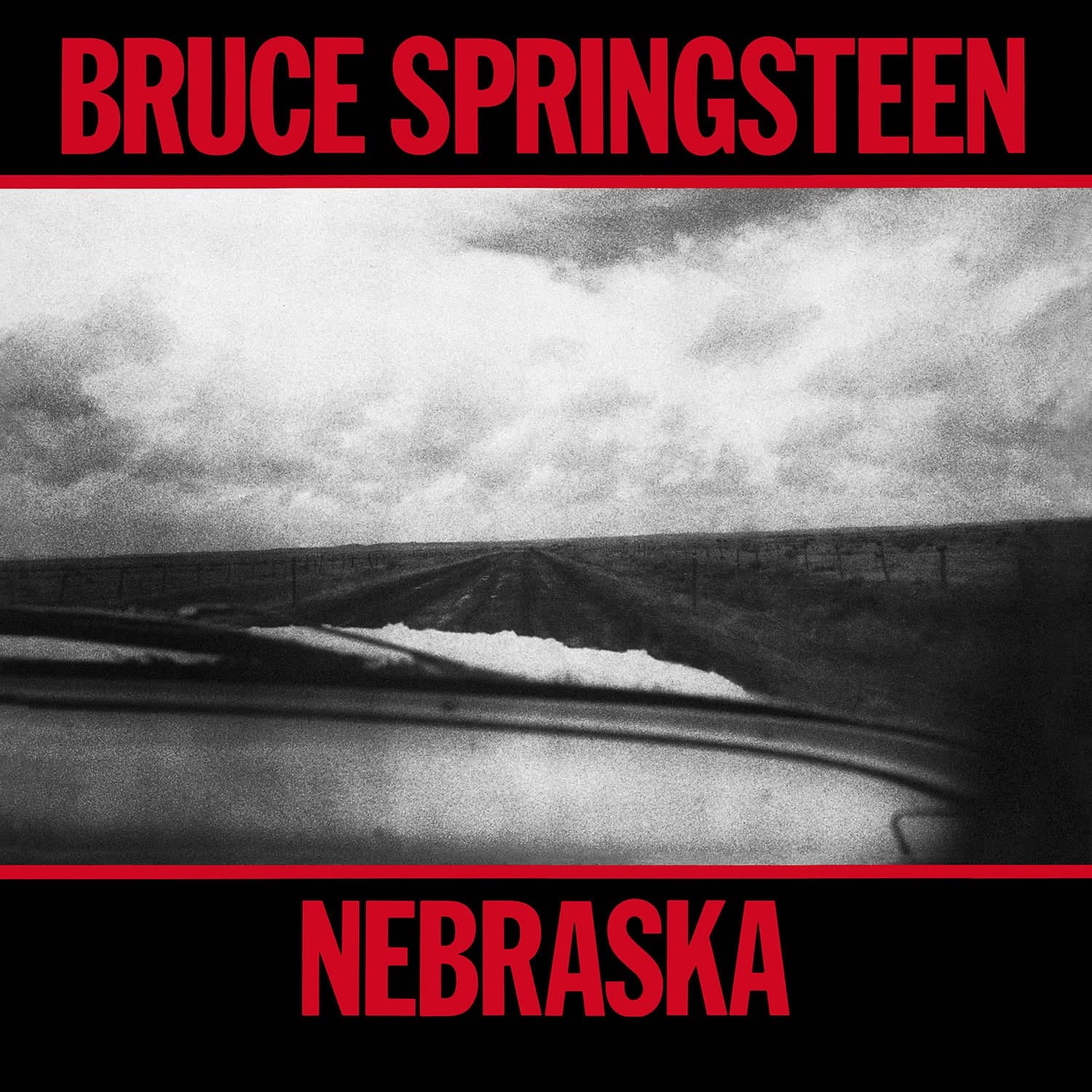
The current moment in American politics feels like it should have a louder soundtrack. The conditions are obvious: wages that don’t keep up with the cost of living, a stagnant job market, wars that begin without sense or just cause. Elections aren’t trusted and violent crime has become a fixture of city living. It appears at times that democratic and social civility has gone out the window. To many, the very fabric of the American ideal would seem to be fraying. But the music that once tried to make sense of that reality has mostly gone quiet.
Which is how I end up back at Nebraska, not as a throwback, but as something uncomfortably current. What’s striking isn’t just that Bruce Springsteen was writing about a country coming apart; it’s that he assumed it already had.
In place of the movement, work, and redemption that structured Bruce Springsteen’s earlier music, it offers a world shaped by deindustrialization, post-Vietnam drift, and social breakdown, where characters move through empty landscapes, commit violent acts they barely understand, and continue, out of habit more than belief, to search for something that might still make sense. But the album ultimately reframes that meaninglessness through a Catholic-influenced belief that is not redemptive, but necessary.
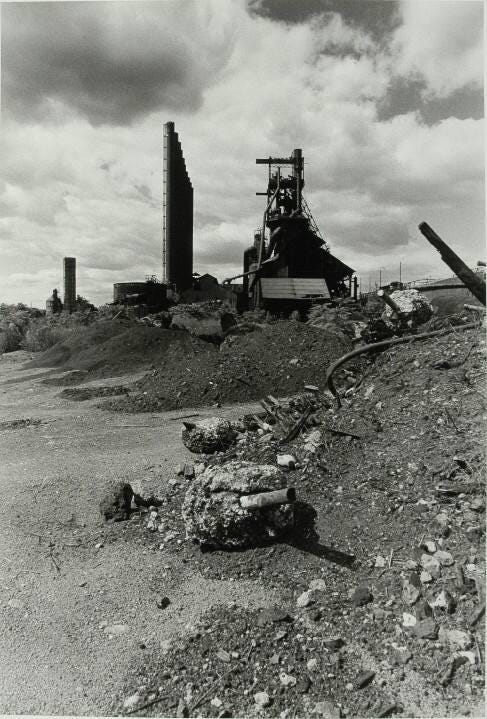
The album should be understood as a product of its historical moment. As union rates declined and the industrial heartbeat of the country slowed, workers faced direct assaults on their material well-being. Collective labor lost power and factories shuttered. And so this record, which was not explicitly political on its face, “became political,” asserts Steven Hyden in his book, There Was Nothing You Could Do: Bruce Springsteen’s “Born in the U.S.A.” and the End of the Heartland. Although the 70s began with a massive wave of strikes, by the end of the decade, “the energy crisis, inflation, globalization, and deregulation” crushed the momentum of the early part of the decade The Vietnam war -- fought mostly by blue collar boys -- and deindustrialization laid “siege” to the working class both materially and mentally.
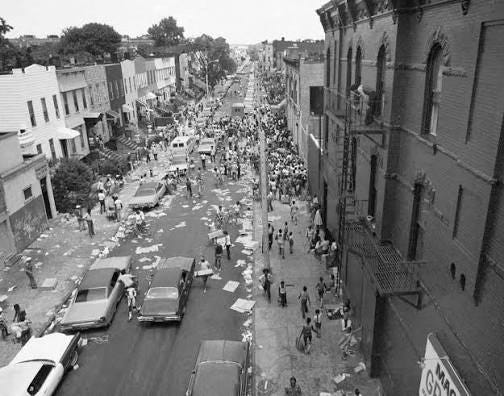
As a direct result, faith in the government cratered and crime rose. Notably, the new violence was largely impersonal. Homicide rates doubled, but homicide rates by strangers increased faster, especially in cities. Serial killers like the Son of Sam captured the public imagination. Property crime and robberies increased as well. In the summer of 1977, New York City was hit by a blackout that darkened most of the city. The streets quickly filled with rioters and looters, with the cops nowhere to be found. Authority still existed, but it became detached and struggled to govern behavior.
On Nebraska, Springsteen uses sonic cues to shape a landscape of lonesome confinement. The album, recorded on a four-track TEAC 144 that had fallen in a river and dried out again, sounds like a fever dream. Nebraska’s intentional imperfections create a haunting underworld of sound. “Skeletal hooks propelled by distant, solitary guitars,” mesh with the “low, wounded range of Springsteen’s mantra-like singing inside ocean-fog reverb,” wrote David Fricke for Mojo Magazine. Intentional imperfections litter the record. The creaking of a chair can be heard below yelps that send the VU meters soaring. The over-modulated harmonica seems poised to melt your speaker cones.
In Springsteen’s own words, the record was meant to sound “restrained,” and “minimal,” to let the narrative come through clearer, but the sound of Nebraska is not intimate, it is claustrophobic. Springsteen considered it a set of “black bedtime stories,” which might all take place over one night. The sonic profile produces an intangible sense that something is lingering just outside the frame. The throbbing guitar on “State Trooper” starts to sound like footsteps. The wails on “Johnny 99” sound like warning cries coming across the plains from someone -- or something -- you don’t want to meet. The record starts to feel like a late-night drive down a seemingly endless road, miles away from the last town that made sense. Neon signs and roadside relics flash by without meaning.
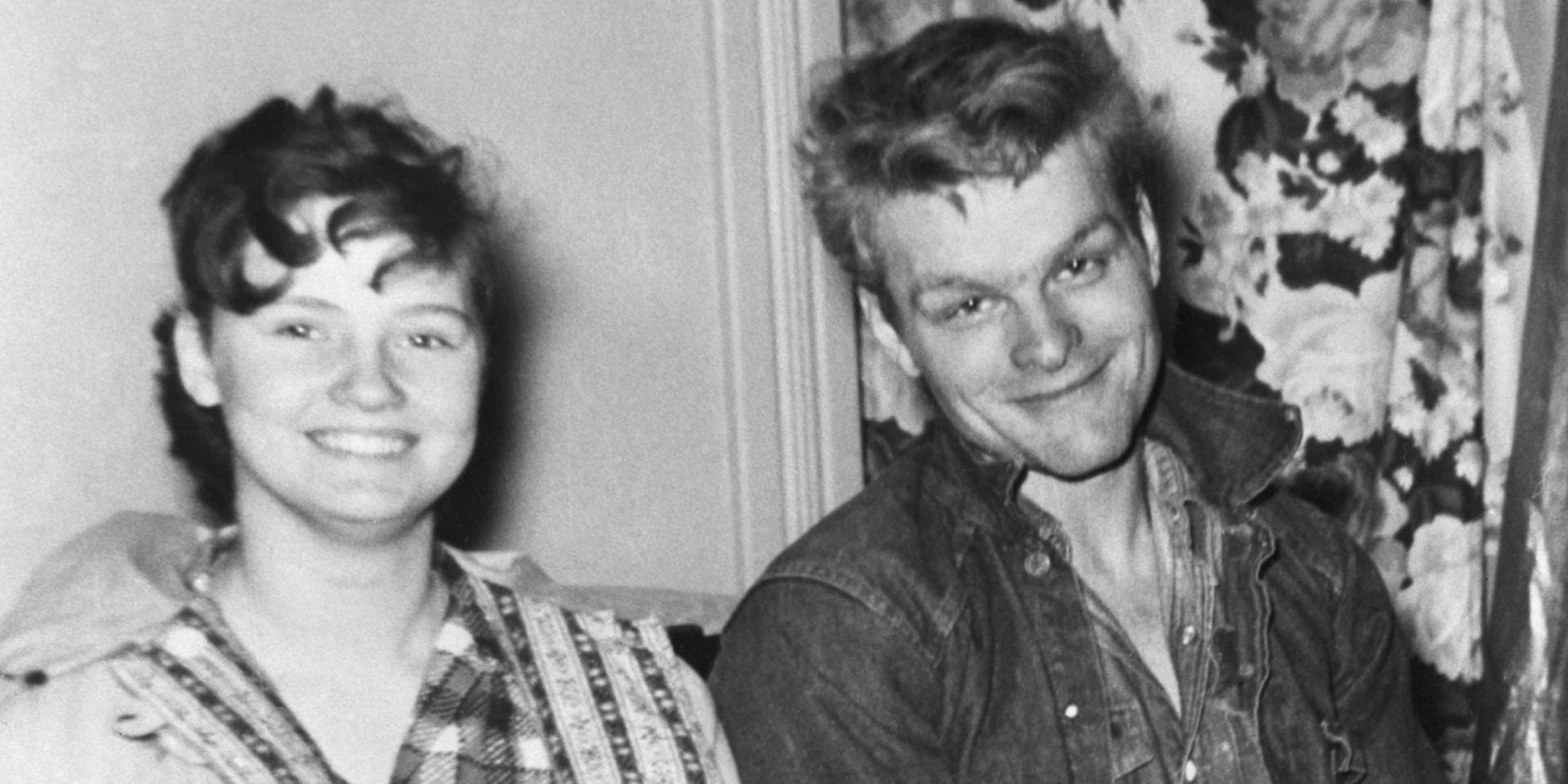
The songs on Nebraska represent social concerns that Springsteen began expressing on The River. Nebraska doesn’t make political statements, per se, but it tells stories from a world where systems are failing without easy explanation. On “Johnny 99,” Springsteen tells the story of a man who loses his job at the Ford plant and shoots a hotel clerk in drunken frustration. “Atlantic City” talks about the mob wars of the early 1980s and the murder of mob boss Philip Testa. And the title track, which opens the record and generally sets the tone, is a first-person retelling of serial killer Charlie Starkweather’s slaughters in the 1950s. These sorts of stories all reflect a societal collapse without naming it. Institutions have failed to wrangle the greed and violence of regular people. Constraints of decency and legality have fallen away. What remains is desolation and a hopeless search for meaning.
Through songs of ambient violence and lonely nights spent chasing fleeting hopes, Nebraska “dissects the vulnerability of the American dream,” writes Ryan Sheeler in “A Meanness in This World: The American Outlaw as Storyteller in Bruce Springsteen’s Nebraska.” Through the eyes of criminals and poor men, Nebraska surveys what happens when the cornerstones of American life -- work, love, family -- crumble and there’s nowhere left to run. Springsteen organizes this world through three recurring motifs: senseless violence, the collapse of ordinary life, and isolation.
On the title track, as the narrator couples with death on the execution line, he expresses little remorse, instead blaming his actions on a “meanness in the world.” This concept permeates every other song on the album in some way. On “Highway Patrolman,” a police officer faces the choice between turning in his own brother or letting him go, ultimately electing to do the latter. He blames his brother’s bad actions on a simple reality: “he just ain’t no good.” On “Johnny 99,” the murderous narrator does show remorse, but seems to dissociate from the reality of his actions, saying “it was more ‘n all this that put that gun in my hand.” Sentenced to 99 years in prison, he begs to be executed instead. These songs of senseless violence create a Hobbesian landscape of selfish desperation, man against man, making what little is possible of a life that is nasty, brutish and short.
On the songs where everyone makes it out alive, Springsteen details other elements of the collapse of ordinary life. “Used Cars,” condemns the myth of upward mobility; the narrator vows he’s never “gonna ride in no used car again,” but he places his bets on winning the lottery, not landing a steady job. “Mansion on the Hill” tells a story from Springsteen’s past of a grand house his father would drive him to see as a child. It’s a ballad of longing and aspiration.
But its title is taken from a 1948 Hank Williams track, which reflects a certain emptiness; Williams sings, “I know you’re alone with your pride dear, In your loveless mansion on the hill.” Within this context, the Springsteen song takes on a different hue. The song positions the mansion as closed-off and unreachable, perched high behind “gates of hardened steel.” Beyond the aspiration the narrator feels, perhaps they sense that the money has built not just distance, but a kind of emotional vacancy—something sealed off as much from meaning as from the road below. The mansion becomes less a symbol of success than of insulation, a place where desire ends but nothing begins. What first reads as envy starts to fracture; the object of longing reveals itself as fundamentally hollow, its grandeur sustained by isolation rather than fulfillment. In that sense, Springsteen is not simply recalling the ache of looking up, but quietly indicting a material world in which the dream, once attained, carries within it the conditions of its own emptiness.
On other tracks, Springsteen tells stories of isolation and paranoia. On “State Trooper,” the narrator becomes increasingly paranoid as he begs a state trooper, either real or imagined, to let him make it home. It’s interesting to consider the motif of the car here. On earlier projects (Born to Run, Darkness on the Edge of Town) the car “represented escape,” or “defined boundaries,” where stories could roll out, asserts Mark Richardson for Pitchfork. On Nebraska, the car occupies a different role. It’s “a kind of isolation chamber, a steel husk that keeps its passengers apart from the world.” or something they travel in seeking some kind of elusive redemption. The sound of the album, with its sparse instrumentation behind wails and yelps, cements this feeling of isolation. Hanging on each next word, the listener starts to hear a throbbing in their own head.
Springsteen also repeatedly puts forth the notion on Nebraska that crime will naturally arise from hopelessness. Just as a cat backed into a corner will scratch his way out, a man with no options will turn to desperate measures. Throughout the record, Springsteen tells stories of labor collapse rolling into crime. “Atlantic City,” tells the story of a man “tired of coming up on the losing end” who turns to criminal activity to be able to give something to his partner. The song is a perfect encapsulation of the decay of Americana imagery and the rise of meaningless violence. The town isn’t just a setting for the events of the song, it’s a metaphor in and of itself. From the beginning of the track, when they’re fighting on the boardwalk, Springsteen paints a picture of a waning American town. It becomes a backdrop for a dying romance and the narrator’s last-ditch search for prosperity. Just as the golden age of Atlantic City is long gone, so too are the glory days of our narrator’s romance and material comfort. On “Johnny 99,” the deadly narrator did it for “debts no honest man could pay.” And on “State Trooper,” the narrator suggests he’s got nothing left but his own paranoia.
In his autobiography, Springsteen wrote of the album that “everyone knows what it is like to be condemned,” expanding the relevance of Nebraska beyond car thieves and murderers. This helps to explain why the record refuses to end where it would seem to lead. If the first nine songs sketch a world stripped of meaning, the final two complicate that diagnosis without quite resolving it. On “My Father’s House,” the narrator dreams of being rescued, an image that feels almost biblical in its simplicity, only to wake and find that reconciliation, like grace, cannot be willed into existence. The house is gone, the past sealed off. It is a cruel specter: redemption appears, then recedes.
But on the final track, “Reason to Believe,” Springsteen ties the sorrow and fatalism of the album into a decidedly Catholic bow. Four vignettes of suffering -- a dead dog, a grieving lover, a man waiting on a miracle -- are bound together by the insistence that people still find “some reason to believe.” This is where the album’s Catholic undercurrent becomes legible, though not in any doctrinal sense. It is not faith as certainty, but faith as compulsion, as the refusal to relinquish meaning even when the world provides none. As Rob Kirkpatrick puts it in The Words and Music of Bruce Springsteen, “people endure… they struggle against all evidence to the contrary, because it’s the only thing that they can do—or else they end up dead, spiritually or literally.”
It’s a fascinating way to close an album about murder, theft, and despair. What emerges is not a clean redemption arc but something more unsettling. The violence of Nebraska does not become meaningful in hindsight; it remains senseless. But “Reason to Believe” reframes that senselessness as the condition under which belief itself becomes necessary. Suffering is not justified, but it is, in a quiet and almost defiant way, repurposed. The characters do not transcend the brutality around them; they insist, stubbornly and irrationally, on living within it. In that sense, the album closes not with an answer, but with a posture: belief as resistance, and faith as the last available form of meaning in a world that offers none.