


In mid-August, 1977, Lester Bangs wrote that we would never agree on anything the way we agreed on Elvis. At the same time, Dolly Parton was doing her damndest to prove him wrong.
Dolly was one of the last great gasps of popular American mythology. She stood as a beacon of tolerance, empathy, and understanding. She was America living up to what it promised to be, and perhaps proof that its promise wasn’t entirely fiction. Bangs was writing from the beginning of the fragmentation of America. As I sit today, we are deep inside of it. If he thought consensus was dead then, where are we now?
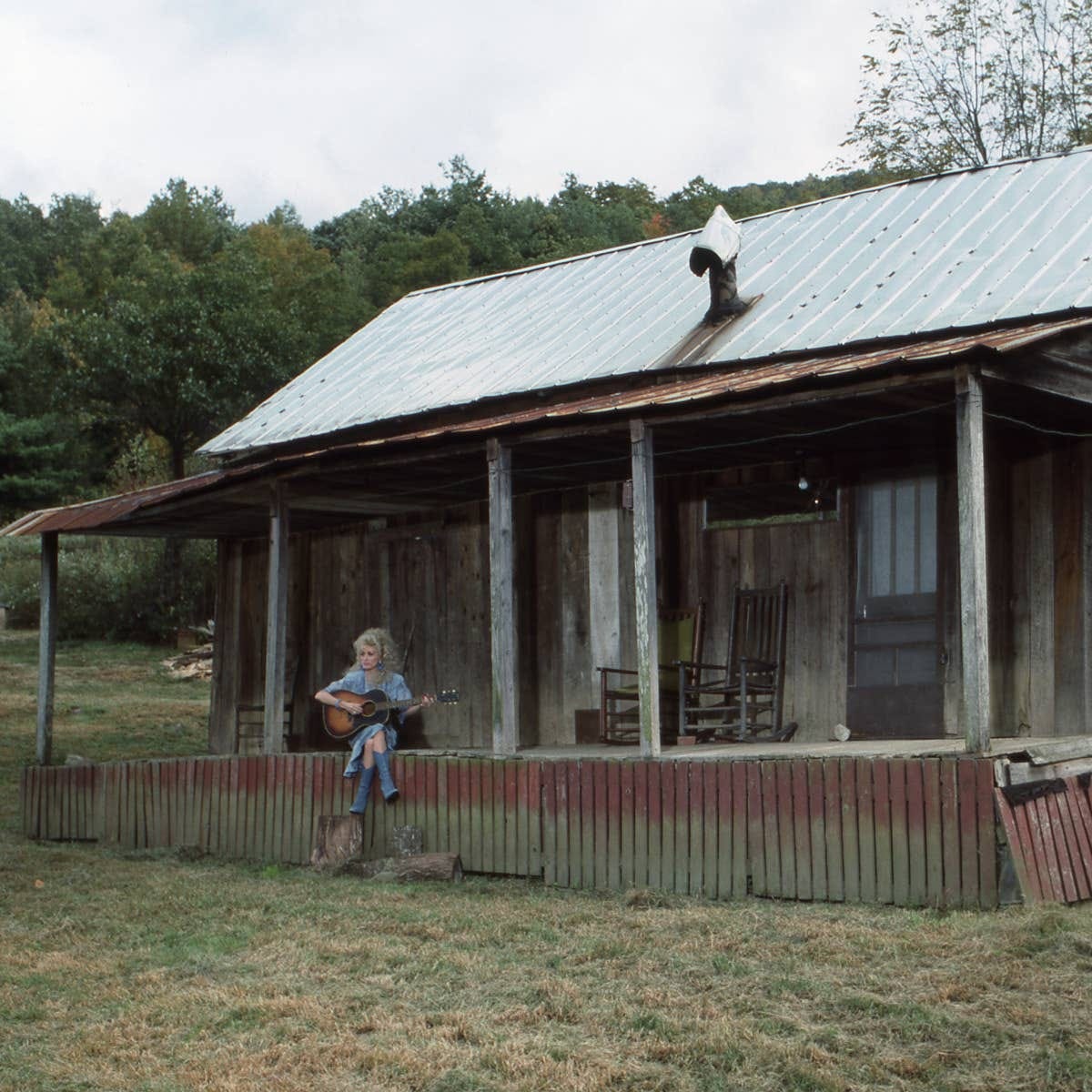
Dolly Parton was born, as you all know from the 1,000 other articles written today, in a one-room cabin. Her father was so poor that he couldn’t pay the doctor who delivered her. He settled the debt with a sack of cornmeal. Before she could read or write, Parton was composing songs. She was playing the Opry by 13.
By her twenties, she was making a name for herself as someone who wouldn’t play by Nashville’s stodgy old rules. She ended her partnership with former musical partner and known kingmaker Porter Wagoner. Five years later, as soon as the charts showed that had been the right choice, Wagoner sued Parton, asking for a percentage of her career for life.
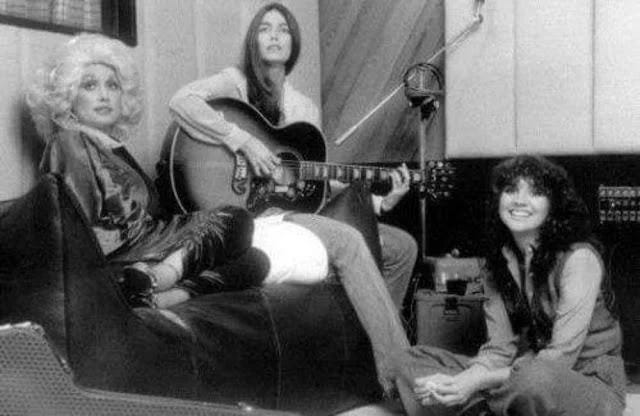
In a way that would become habit for Dolly, she refused. Throughout her career, she fought for the business decisions that would later prove genius. When her lawyers and accountants told her that a country star shouldn’t act in movies or open a theme park, she got new lawyers and accountants. I will resist the tendency to rehash the remainder of her life, though I will recommend her cover of “Mule Skinner Blues,” as well as the entirety of her Trio album with Emmylou Harris and Linda Ronstadt.
Another striking quality of Dolly Parton that has become apparent was how equally she was venerated by every strata of American society. From conservative uncles to gay kids, everyone can find something to love about Dolly Parton. I struggle to find many other artists that would be celebrated by both Barack Obama, our most musically savvy president, and Donald Trump, our least.
It wasn’t neutrality – Dolly was famously apolitical but never needed a party line to let you know where she stood. In 1988, the Dollywood foundation promised $500 to every seventh and eighth grader in her county who finished high school. The dropout rate fell from 35% to 6%. Three years later, she founded the American Eagle Foundation to shelter the largest collection of non-releasable bald eagles in the world.
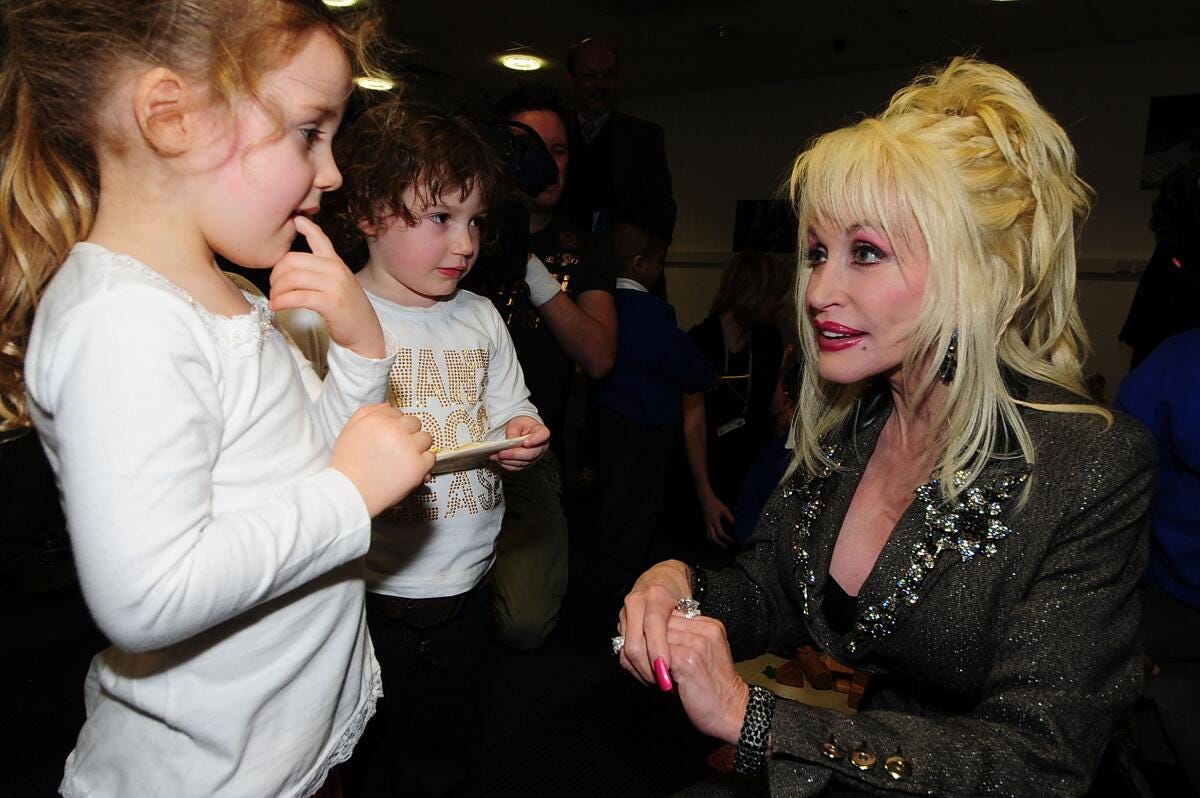
In 1995, she started her Imagination Library. The Library ships one book per month for free to children in participating states until age five. Initially, it was meant to increase literacy in her home county. It was a tribute to her father, who never learned to read or write. Today, the Library has sent more than 300 million books to kids across America, asking for nothing in return.
In 2007, she raised a million dollars for a better hospital in her hometown. In 2016, after the devastating East Tennessee wildfires, she raised $22 million dollars to help locals pay for rent, utilities, food and medical services. She separately gave $1,000 a month to any family whose home had been destroyed. In 2022, Dollywood announced it would cover tuition for any of its 4,000 employees who wished to further their education, minutes from the cabin in which she was born.
Like a living saint she showed us where she stood through the causes she championed. These were pre-ideological causes, mostly. Literacy, kids, birds. Neighbors who just lost their house to a wildfire. Through it all, authenticity was a load bearing pillar. She never hid the fact that she came from nothing. The meaning that she created was often in tribute to her humble upbringing.
So Dolly stemmed the tide of Lester Bang’s prophecy of solipsism running rampant, tearing apart the fibers of the American community. For a few decades, one woman cut through the isolation and information siloing. She inspired kids from all backgrounds to dream and to put a bit of good into the world. She showed us a model of goodness based on nothing greater than caring for our neighbor. And maybe that’s why news of her death hurt especially badly yesterday.
Today, the nation’s richest are almost entirely uninterested in charity. We all know there will not be a Musk Library or a Mark Zuckerberg Cancer Research Center. Meanwhile, the American landscape that so inspired Dolly Parton is being stripped bare. Butterflies, long Parton’s unofficial logo, have faced an unprecedented 22% decline in the last 20 years. Wild horses are being rounded up for slaughter and there are bulldozers in Big Bend National Park.
So, when I listen to My Tennessee Mountain Home – an album inspired by the simple beauty of her poor, rural childhood – and when I think of how she used the money from its sales to improve the lives of other children, not only in East Tennessee but around the country – I can’t help but feel that Dolly was one of the last great Americans. I don’t think I’m alone, either. I’ve heard from friends and coworkers that they felt unusually affected by her passing. Sure, it was unexpected, but it isn’t tragic or shocking – not like Kennedy, not like Diana. I think what stings most about Dolly leaving is the knowledge that there probably never will be another her.
And today, the world feels a bit like a Nudie suit that’s lost its brightest rhinestone. Not because of the songs she wrote, not even because of the lives she made better. But because Parton proved Bangs wrong. We agreed on Dolly. Her songbook gave us permission to dream of what’s possible in America with a dream. And so we agreed to cast off our tendency to scorn for a little while longer.
Savvy, compassionate, and always ahead of her time. Throughout her career she seemed to be very aware of her growing icon status, and took agency in conscientiously defining her own persona in a way that few other celebrities I can point to have. And always carefully directed towards the end of uplifting people. Wonderful tribute, Teddy.